
To calculate local SEO ROI, count the calls, forms, and direction requests that search produces, multiply those leads by your close rate and customer value, then compare the resulting gross profit with what you pay for SEO. The formula is (gross profit from SEO leads minus SEO cost) divided by SEO cost. Everything else is making those inputs trustworthy.
Most owners never get that far. Reports arrive full of rankings, impressions, and bounce rates, and none of it says whether the phone rang more. So you keep paying every month and still can't say whether the work pays for itself.
This guide walks through four steps: set up tracking, put a dollar value on a lead, run the calculation, and report results you can defend. At Web Solutions CA, we build SEO reporting around these same numbers for Orange County small businesses, so every step is something you can do with a spreadsheet and free tools.
What local SEO ROI measures and what you need first
Local SEO ROI is the profit from customers that local search sent you, compared with what you spent on SEO. It is a business number, not a marketing one. A first-page ranking is not a return. A customer who paid you is.
Returns versus signals
Rankings, impressions, and traffic are signals. They show that visibility is moving, which helps you diagnose problems. They do not show whether the work pays for itself. The real returns are calls, form fills, direction requests, and booked jobs that you can trace back to search. Every step below ties those actions to dollars.
Rankings show activity, but only customers show return.
What to have in place
Check these items before you start. Missing any of them makes your final number unreliable.
- A verified Google Business Profile with the correct name, address, and phone number
- A website with a visible phone number and at least one contact form
- Three months of baseline data: calls, form leads, and new customers per month
- A rough idea of your average customer value and how many leads become customers
The baseline matters most. Without it, you cannot separate leads that SEO created from leads you would have received anyway.
When local SEO is worth the cost
Local SEO pays off fastest when one new customer is worth hundreds of dollars or more, as with tax preparation, windows and doors, immigration services, or home repair. In those businesses, a handful of extra customers covers a monthly fee. Step 3 shows how to find your exact break-even point.
Step 1. Set up tracking for calls, forms, and directions
Track every way a local customer can contact you, and tag each one by source. Three channels cover most local businesses: phone calls, website forms, and Google Business Profile actions. Set these up before you judge any result, because you cannot measure ROI backward.
Track calls and forms on your website
Install call tracking with dynamic number insertion. It swaps the phone number shown on your site based on where the visitor came from, so you can see which calls came from organic search. Your listed number stays unchanged everywhere else, which protects NAP consistency across directories.
Next, mark form submissions and tracked calls as key events in Google Analytics 4. Each one then appears with its landing page and traffic source, so you can say which page produced which lead.
Track Google Business Profile actions
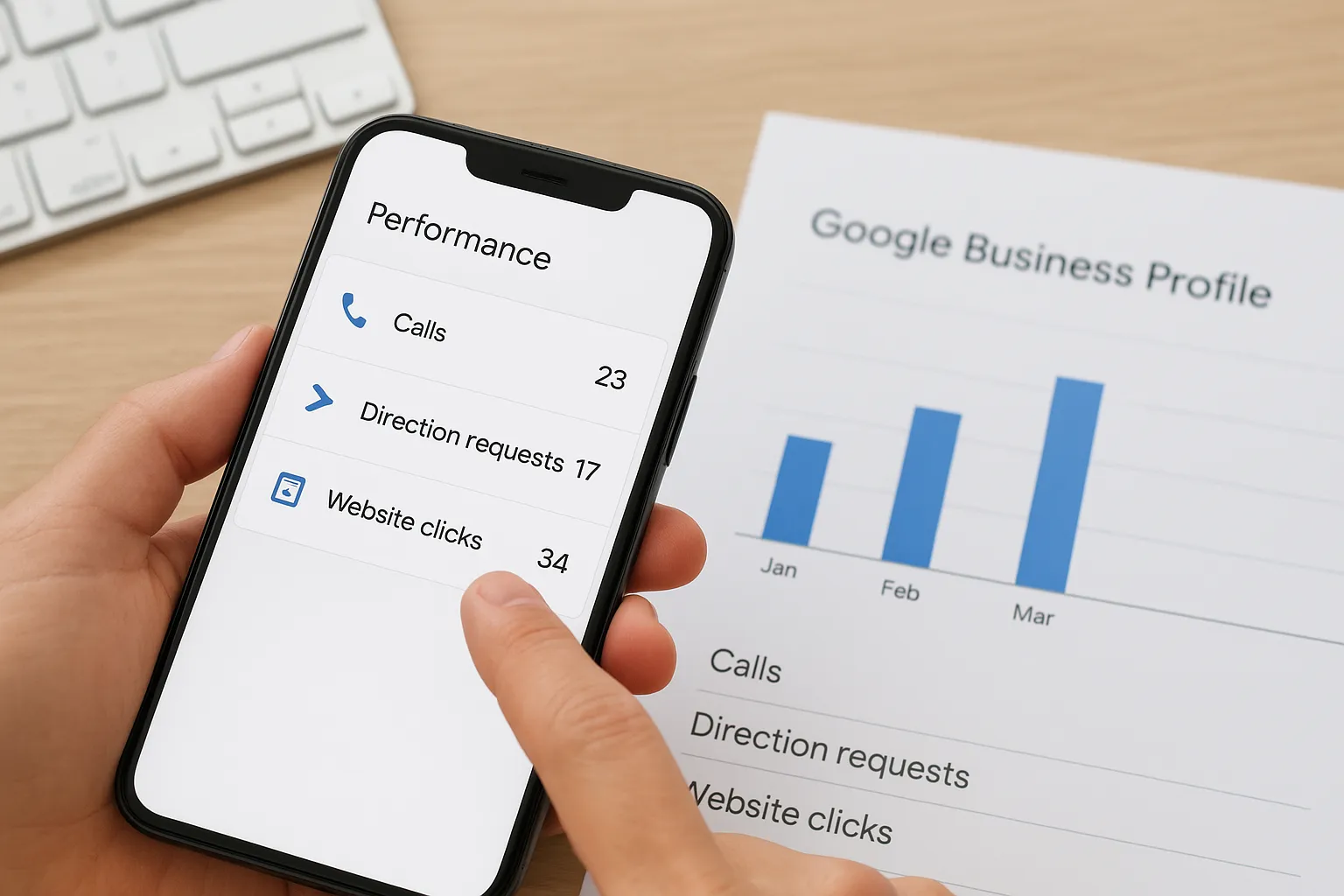
Your profile's performance report shows calls, direction requests, and website clicks. Copy those totals into a spreadsheet each month. Then add UTM parameters to the website link in your profile, so profile visits appear separately in Analytics:
https://yourwebsite.com/?utm_source=google&utm_medium=organic&utm_campaign=gbp
Ask every new customer how they found you
Tracking tools miss people who see your listing and call from a different phone. Add "How did you hear about us?" to your intake form and your phone script. Tally the answers monthly. This simple habit often catches leads that software misses, and it keeps your local SEO ROI from being understated.
If you can't trace a lead to its source, you can't credit SEO for it.
Step 2. Put a dollar value on every lead
A lead's value is your close rate multiplied by what a customer is worth to you. You need three numbers, and you already have most of them in your invoices and call log.
Find your close rate
Count the leads you received in the last three months, then count how many became paying customers. If 12 leads produced 3 customers, your close rate is 25%. Calculate calls and form leads separately, because phone leads usually close better than web forms.
Choose a customer value and a margin
Use the average revenue per customer. If customers typically come back, include repeat business over a realistic period. Then apply your gross margin, the share of revenue left after the direct costs of doing the work. Gross profit is a stricter and more honest basis than revenue, because revenue ignores what the job cost you to deliver.
Here is the calculation with example numbers:
- Close rate: 25%
- Average customer value: $1,200
- Gross margin: 40%
- Value of one lead: 0.25 × $1,200 × 0.40 = $120
A lead is worth what it earns you after costs, not what the customer pays.
Step 3. Calculate local SEO ROI and break-even
Subtract your SEO cost from the gross profit that SEO leads produced, then divide by that same cost. A positive result means the work paid for itself. No special calculator is needed. A spreadsheet with the rows below does the job.
The formula and a worked example
Local SEO ROI (%) = (Gross profit from SEO leads - SEO cost) / SEO cost × 100
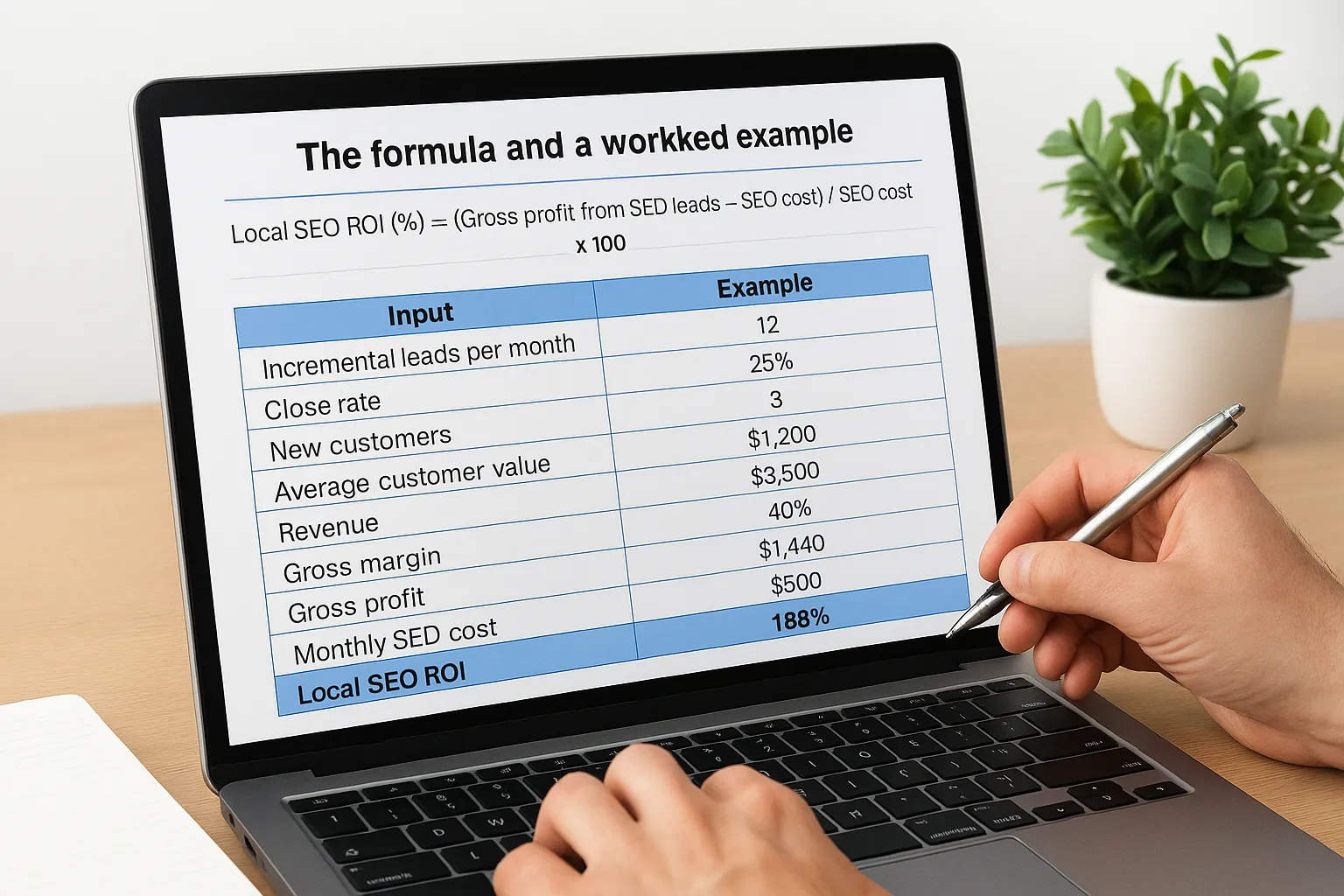
Count only incremental leads, meaning those above your three-month baseline. Here is a month with 12 extra leads and a $500 monthly SEO fee:
| Input | Example |
|---|---|
| Incremental leads per month | 12 |
| Close rate | 25% |
| New customers | 3 |
| Average customer value | $1,200 |
| Revenue | $3,600 |
| Gross margin | 40% |
| Gross profit | $1,440 |
| Monthly SEO cost | $500 |
| Local SEO ROI | 188% |
The math is ($1,440 - $500) / $500 × 100. Every dollar spent returned $1.88 in profit on top of the dollar itself.
Find your break-even point
Divide the monthly cost by the value of one lead. At $500 per month and $120 per lead, you need about five extra leads a month to break even. Our monthly SEO service starts at $499.99, so that figure is a realistic test for a small business.
If five extra leads sounds easy, local SEO is likely worth it for you. If it sounds like a stretch, either your customer value is low or your cost per month is too high for your margins.
Break-even is the quickest answer to whether local SEO is worth it for you.
Step 4. Report results the owner can act on
Report local SEO ROI monthly in business terms, and judge it over six months or more. A report that a busy owner can read in two minutes gets used. A 30-page analytics export gets ignored.
What to put in the monthly report
Keep it to the numbers that connect to money:
- Leads by source: calls, forms, direction requests, and GBP actions
- New customers from those leads
- Gross profit from those customers
- SEO cost for the month
- ROI for the month and the running total
- One line on what changed and what happens next
Leave rankings and bounce rate out of the main report. Rankings fluctuate daily, and a drop on one keyword causes panic without telling you anything about revenue. Keep them in an appendix for diagnosis.
How long to wait and when to adjust
Local SEO builds over months, so early months often show a negative ROI while the profile, reviews, and pages gain traction. Evaluate on a trailing six-month view instead of one month's result. A single month, good or bad, is noise.
If leads stay flat after six months, check tracking first, then the usual causes: an incomplete profile, few reviews, a slow site, or thin location pages. Fix the cause before you decide local SEO does not work for you.
One month tells you little, and six months of tracked leads tell you the truth.
Put your numbers to work
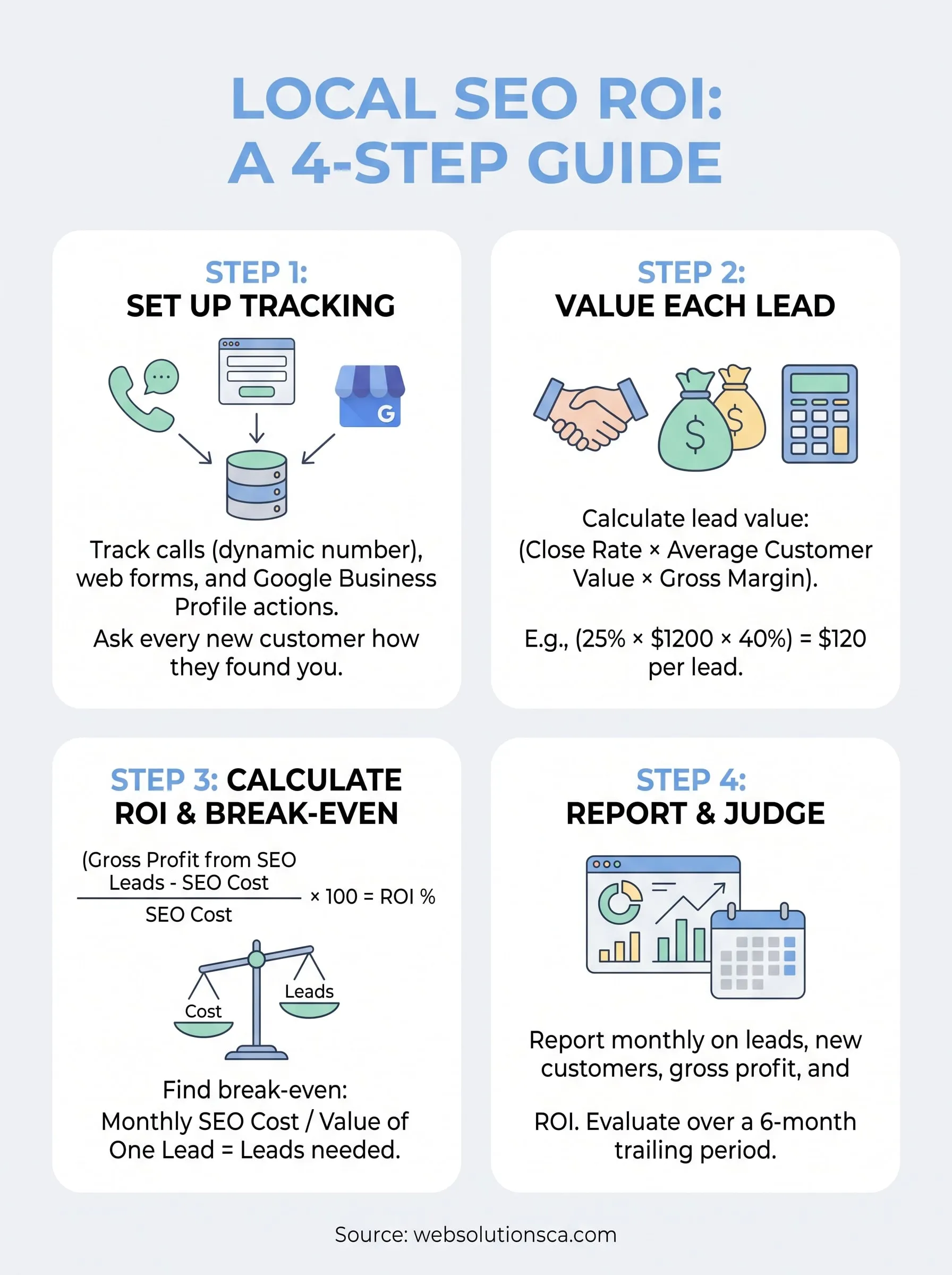
Local SEO ROI comes down to four moves. Track every call, form, and direction request. Value each lead by close rate, customer value, and margin. Subtract cost from gross profit and divide by cost. Then report that number monthly and judge it over half a year. If your break-even lead count is small, local SEO is one of the more dependable ways to bring in customers.
You do not need to build this alone. If you run a small business in Orange County and want tracking, SEO, and reporting that tie back to real customers, talk to Web Solutions CA about a local SEO plan that fits your budget.