
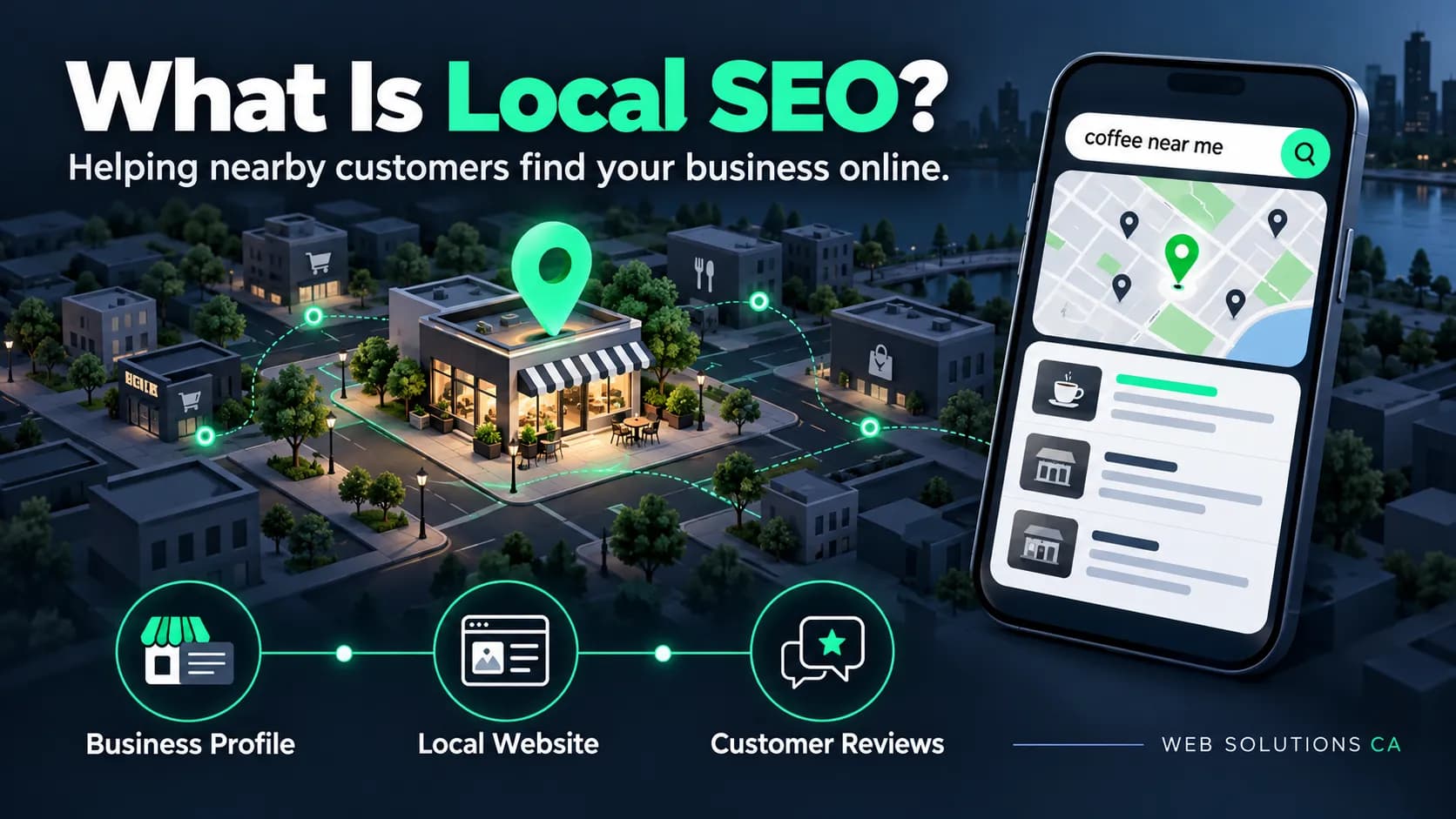
Local SEO vs. Traditional SEO: The Differences, the Overlap, and What Your Business Needs
Your website gets visitors, but the phone stays quiet. Meanwhile, a competitor shows up on Google Maps whenever someone searches for your service. Should you fix your Google Business Profile, improve your website, or start publishing content?
The short answer is: prioritize local SEO when customers need you nearby. Prioritize broader organic SEO when you can sell beyond your location. If you serve a local market, you'll usually need both, with different priorities.
Understanding how local and traditional SEO work together helps you put your time and budget toward the searches most likely to bring you customers. This guide explains where they differ, where the work overlaps, and what deserves your attention first.
Local SEO vs. Traditional SEO: Get the Answer in One Minute
Traditional SEO, often called organic SEO, helps your website appear for relevant questions, products, and services. Your audience can be local, national, or international.
Local SEO focuses on searches where geography matters. It combines website optimization with accurate business information, reviews, and an eligible Google Business Profile.
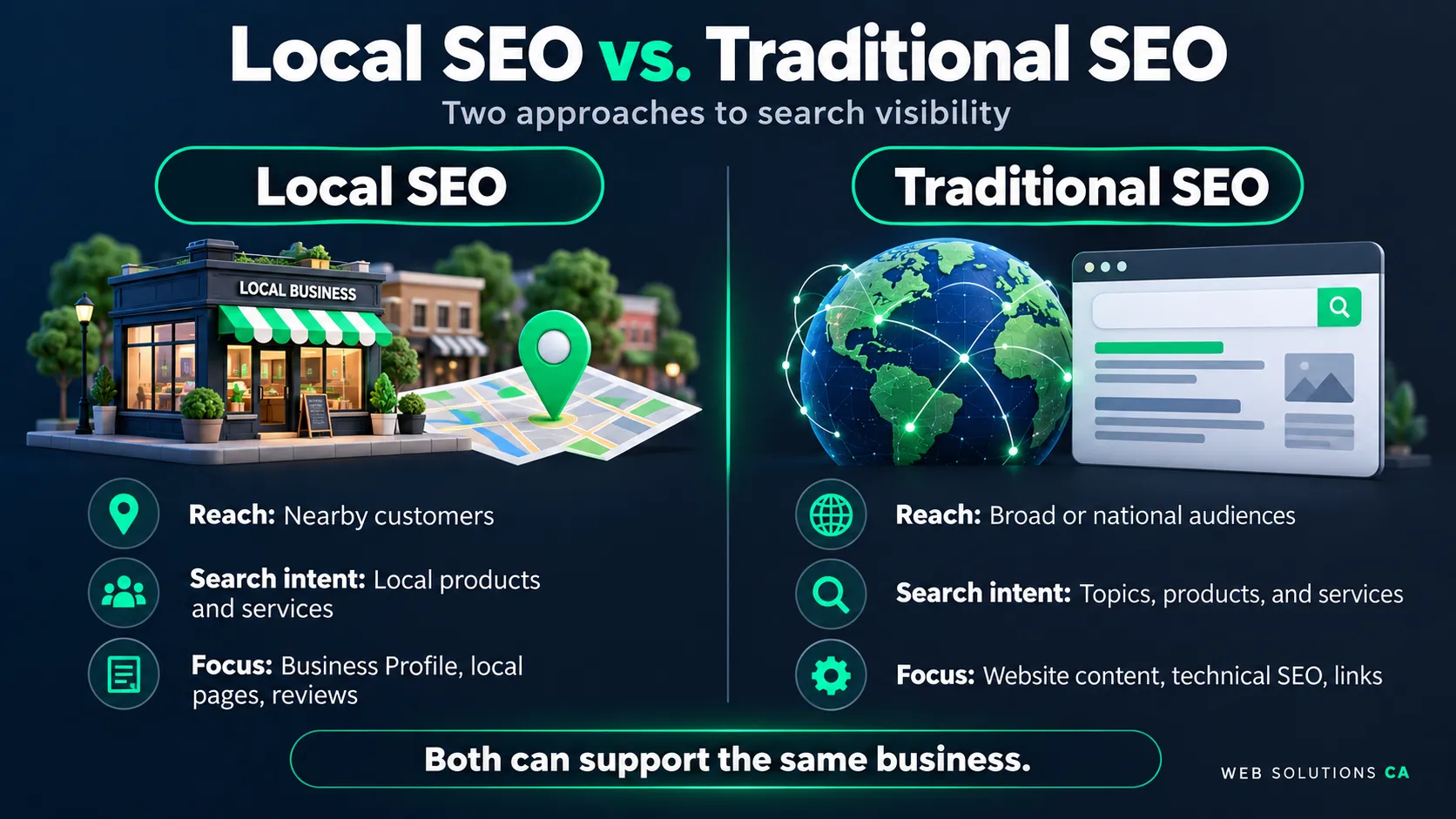
These approaches aren't competing products. Traditional SEO can target local searches, too. Local SEO adds the information and signals that help customers find and evaluate a nearby business.
Quick Five Factor Difference Between Local SEO and Traditional SEO
| Factor | Local SEO | Traditional SEO |
|---|---|---|
| Main audience | Customers in your service area | Customers searching relevant topics anywhere |
| Main surfaces | Google Maps, local pack, local organic results | Organic website results |
| Typical search | Emergency plumber in Irvine | Why does my water heater leak? |
| Key work | Profile, reviews, local pages, listings | Content, technical SEO, internal links, backlinks |
| Business outcome | Calls, visits, local bookings | Inquiries, purchases, relevant website visits |
How Customer Intent Changes the Search Results You Compete In
A customer who needs help now searches differently
Think about two homeowners. One searches "why is my AC blowing warm air?" The other searches "AC repair near me."
The first wants an explanation. A useful troubleshooting article can earn that visit through traditional SEO. The second wants someone who can come out. At that moment, your profile, reviews, and service page matter more.
These differences affect the results you compete in. Organic results link to websites. The Google Local Pack displays local businesses, often beside a map. Google Maps and the expanded local-results view, commonly called the Local Finder, offer more ways to explore nearby options.
Your website and profile compete in different places
The search engine results page, or SERP, may show a Google Local Pack alongside organic website links. Google Maps and Google Local Finder give customers more local listings to explore.
Local search rankings depend mainly on:
- Relevance
- Distance
- Prominence
That explains why your Google Maps rankings can change across neighborhoods. Other local SEO ranking factors can also affect your visibility in the Local Pack, which is why local optimization involves more than simply adding a city name to your website. Google also explains how to improve your local ranking.
Where Local SEO and Traditional SEO Overlap
A complete profile won't fix a website that leaves visitors confused. If someone clicks through and can't find the service they need, your visibility hasn't finished the job.
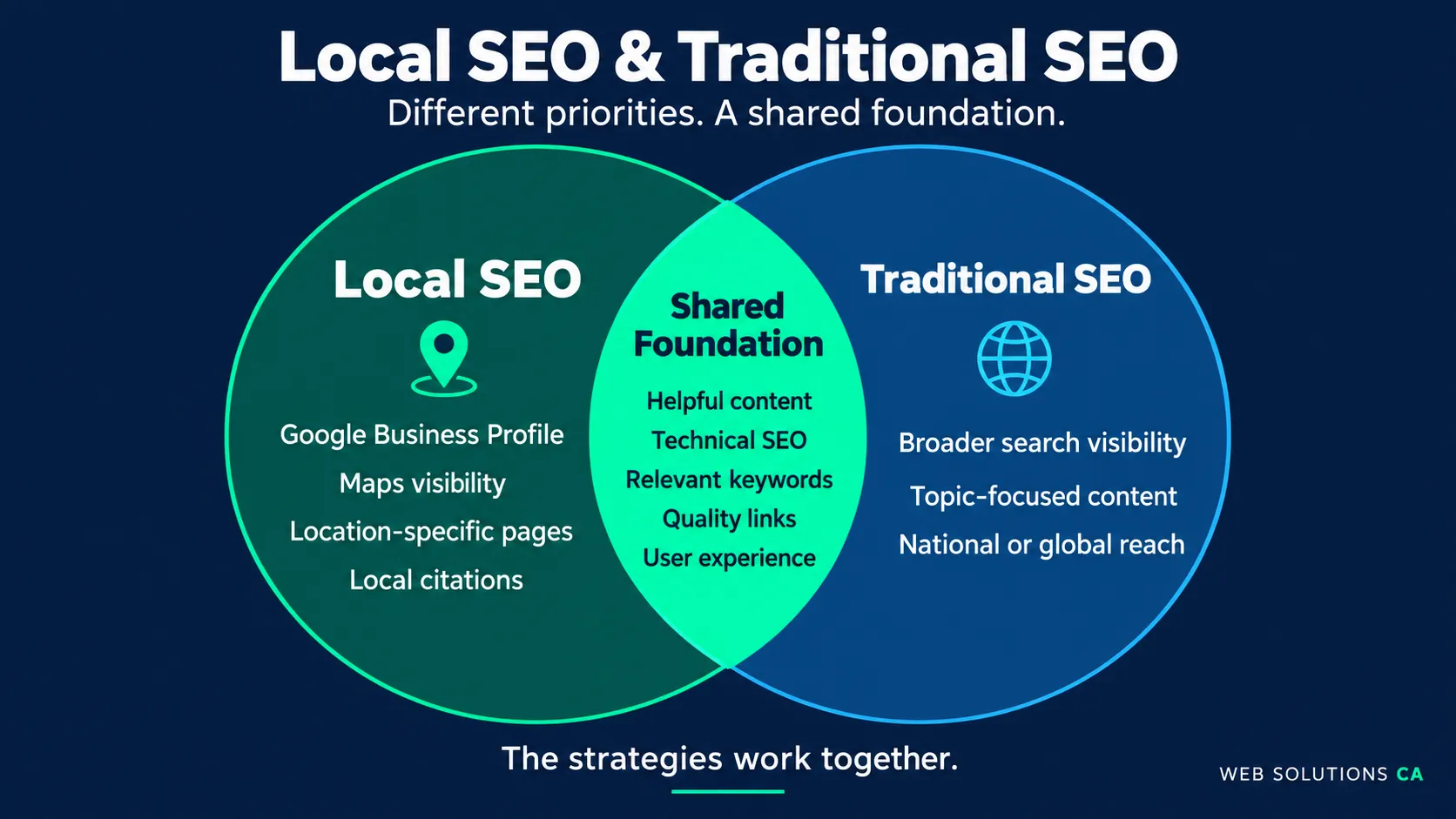
Both strategies need clear service descriptions, helpful content, mobile usability, and sensible internal linking. Technical SEO makes important pages accessible. On-page SEO helps explain what each page covers. Local business schema also helps search engines understand key details about your business, making it a clear example of where technical and local SEO overlap.
E-E-A-T: Build Trust with Real Experience and Expertise
E-E-A-T means experience, expertise, authoritativeness, and trustworthiness. Real qualifications and genuine project details help readers assess you; invented stories do the opposite.
Which Strategy Fits Your Business: Local, Traditional, or Both?
| When to Prioritize Local Discovery | When to Prioritize Broader Organic Visibility |
|---|---|
| Customers visit your business, or you travel to them. | Customers can purchase products or services without an in-person interaction. |
| Best suited to restaurants, salons, dentists, and home-service businesses. | Best suited to online stores, software companies, and remote service providers. |
| Focuses on accurate business hours, clear ordering information, and an optimized Google Business Profile. | Focuses on optimized product pages, comparison content, and resources that answer customer questions. |
| Helps nearby customers discover your business, evaluate your offerings, and get in touch. | Attracts relevant organic traffic from people likely to purchase your products or use your services. |
| Primary goal: Increase local visibility and customer inquiries. | Primary goal: Increase relevant search traffic and online conversions. |
When Combining Both Makes Sense
A furniture retailer with a showroom and nationwide shipping needs both. Local customers need visiting information, while online shoppers need product details and delivery options.
Even a purely local business benefits from website content that helps customers compare services. Someone may find you in Maps, read your website, check reviews, and return later to book.
Local SEO can't replace all traditional SEO work. Decide which customer journeys matter, then support each step.
How Traditional SEO Works: Build a Website Worth Finding
Traditional SEO helps customers find your website, understand your offerings, and take the next step toward becoming customers.
Start with the questions customers ask before paying you. “Roof repair cost” and “emergency roof repair” represent different needs, so they may deserve different pages. Keyword research should help you decide what each page needs to answer.
Next, check whether your website makes finding those answers easy:
- Can Google access your important pages?
- Can visitors find the service they need?
- Does your contact form work on a phone?
Fix those problems before publishing ten more articles.
Make each page clear and useful. Write descriptive titles and headings, answer customer questions, and link to relevant pages. Schema markup can communicate structured details where appropriate, but it isn't a ranking shortcut.
Earn relevant links through useful resources and legitimate relationships. Finally, give visitors an obvious next step: request an estimate, book an appointment, or buy. Organic traffic matters when it helps people move toward becoming customers.
How Local SEO Works: Make Your Business Easy to Discover and Trust
Set up your Google Business Profile. Check eligibility, then claim and get your profile verified. Google generally allows businesses that receive customers at a physical location or travel to customers. Online-only businesses are ineligible under its Business Profile guidelines.
Check the details customers rely on before contacting you:
- Do your categories and services accurately describe your business?
- Are your hours, phone number, and website current?
- Does your address or service area follow Google’s rules?
Service-area businesses should hide their address if they don’t receive customers there.
Make local pages useful. Build pages around actual services and places you serve. Explain coverage, availability, and practical details. Include genuine job photos or customer feedback where you have permission.
Don’t duplicate a page twenty times and change the city name. Each location page should give customers useful information about your work there.
Keep listings accurate and reviews honest. NAP means name, address, and phone number. Check those details across your website, Google, Yelp, Bing Places, and relevant local directories. Correct outdated information so customers can reach you.
A practical local SEO audit can uncover gaps in these areas before you invest more in content or other local SEO work. During it, you should review your profile, listings, website pages, and contact process as a whole.
Measure SEO Success From Visibility to Qualified Customers
Google Search Console shows which queries and pages earn impressions and clicks. Google Analytics helps track website activity and configured conversions. Your Business Profile provides available discovery and interaction metrics.
Keep the limits clear. A call-button click doesn't prove a completed conversation. A direction request doesn't prove a visit.
Use a simple lead log with the date, source, requested service, location, and outcome. Compare qualified leads and booked work with your SEO spending. If visits rise but inquiries don't, inspect the pages and contact process before assuming you need more traffic.
Rankings and traffic provide context. Qualified inquiries and booked work tell you whether your SEO is helping the business.
Common Local and Traditional SEO Mistakes to Avoid
The expensive mistake is optimizing for customers you can’t serve. Check search intent and service coverage before approving a keyword list.
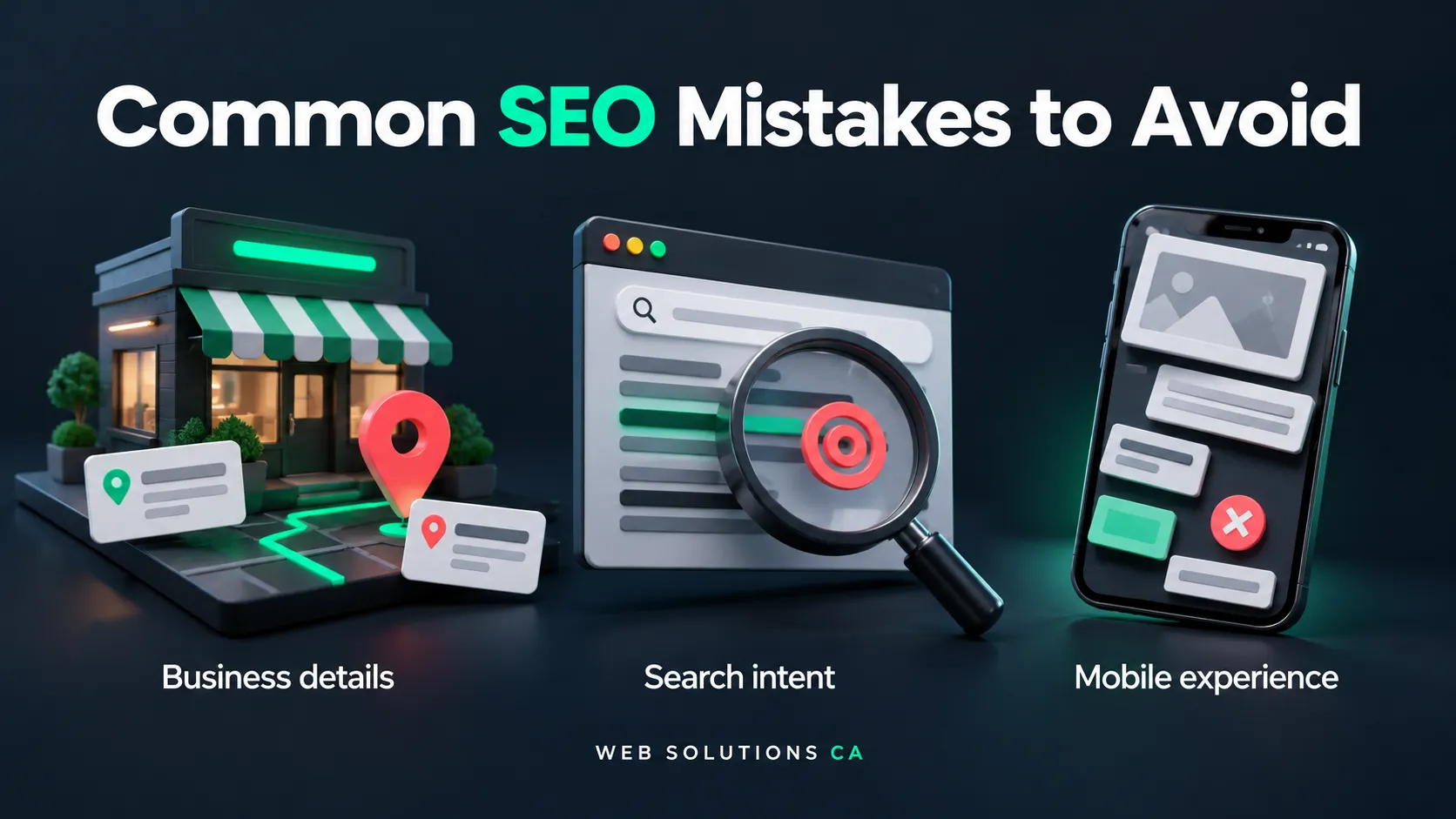
Then watch for these common problems:
- Thin location pages: Changing the city name without adding useful local information.
- Inaccurate business hours: Leaving customers unsure when they can visit or reach you.
- Broken contact forms: Losing inquiries because visitors can’t submit their details.
- Generic service descriptions: Failing to explain what you offer and who you help.
- Chasing authority scores or link counts: Treating third-party scores as Google’s ranking scores or assuming more backlinks mean better quality.
Fix the problems that stop customers from finding, understanding, or contacting your business first.
Frequently Asked Questions About Local and Traditional SEO
Can You Do Local SEO Without a Website?
Yes, an eligible business can use a Business Profile without a website. However, a website gives you space to explain services, answer questions, and control the booking experience.
Can an Online-Only Business Use Local SEO?
You can create relevant content for geographic audiences, but an online-only business cannot obtain a Business Profile simply by targeting a city. Focus on organic discovery where you serve customers.
Is Local SEO Easy, and Is It Worth the Effort?
Basic updates are manageable. Competitive local business marketing requires ongoing attention. Its value depends on customer demand, competition, and whether new inquiries become profitable work.
How Long Does Local SEO vs. Traditional SEO Take to Show Results?
There's no universal timeline. Some corrections help quickly; broader improvements can take months. Your starting point, competition, implementation, and Google's processing all affect progress. Avoid guaranteed deadlines.
Is Traditional SEO Still Effective as Search Evolves?
It remains relevant when people use search to research and choose businesses. Keep evaluating which pages attract the right visitors and drive purchases or bookings.
How AI Search Affects Local and Traditional SEO
Artificial intelligence is changing how search presents information. Google says established SEO practices remain relevant to AI features, with no special optimization required. Keep content accessible, accurate, and useful.
Choose Your Next Step
Before committing to a larger campaign, review your strongest service, your most valuable customer type, and your realistic service area. Those three details will help you decide whether your next dollar should go toward profile improvements, better website pages, or a coordinated SEO plan.
If you're unsure where to start, contact Web Solutions CA for a free SEO audit. We'll help you understand where your business stands and which improvements deserve attention first.