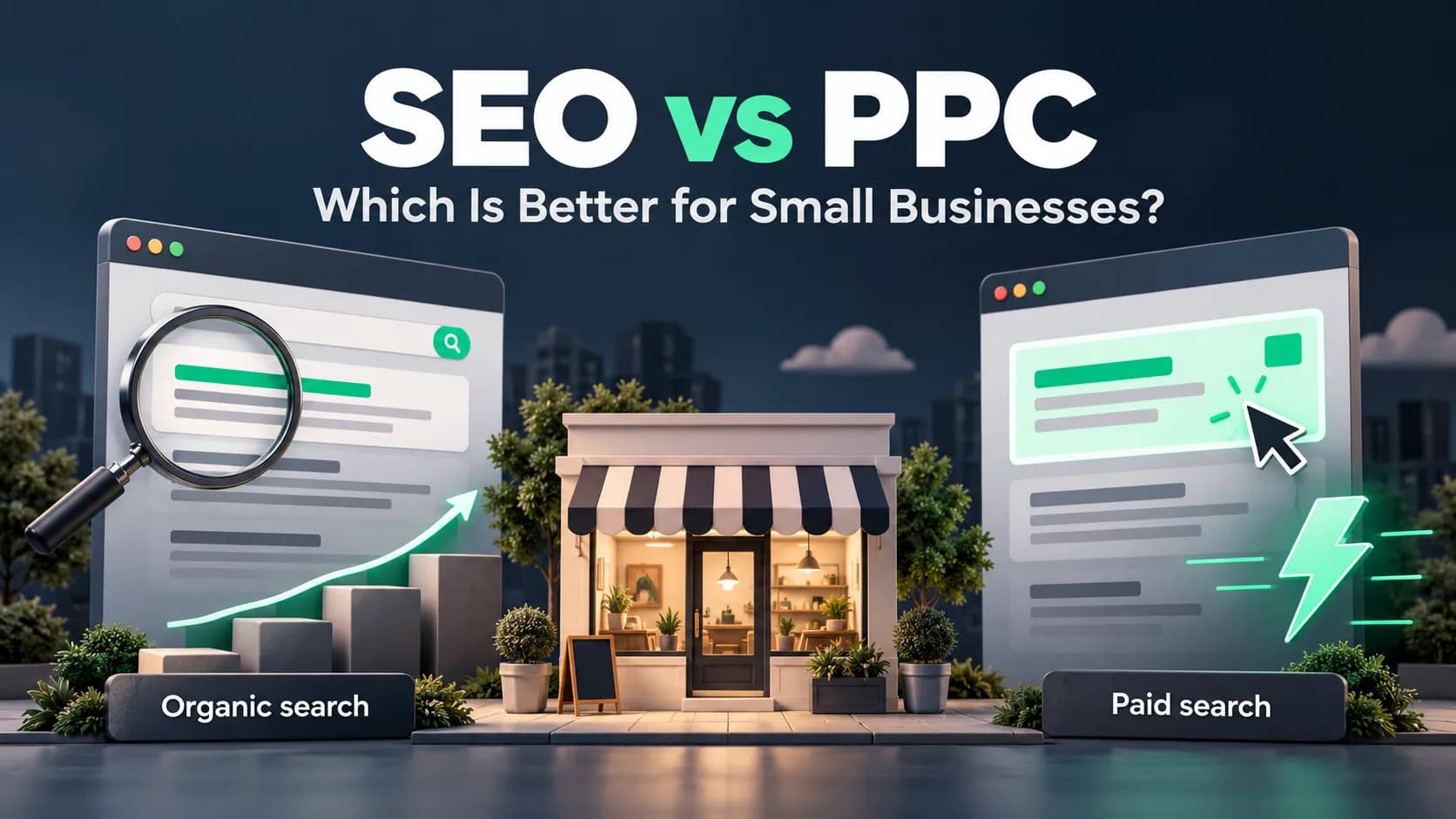
SEO vs PPC: Which Is Better for Small Businesses?
You have a limited marketing budget and need it to bring customers through the door. Should you pay for search ads or invest in getting found organically? The SEO vs PPC decision can sound simple until you compare the actual costs.
One promises long-term visibility without paying for every click. The other puts your business in front of potential customers almost immediately, but the traffic stops when you stop paying.
This guide compares SEO and PPC costs, benefits, and results, with practical examples and a 90-day plan to help you choose.
What Is SEO?
Search Engine Optimization (SEO) improves how your website appears in unpaid search engine results pages (SERPs). Local SEO also helps nearby customers discover your business through local listings and Google Maps.
| Pros of SEO | Cons of SEO |
|---|---|
| No advertising fee for organic clicks | Results develop gradually |
| Useful pages can attract ongoing traffic | Rankings can change |
| Supports local and broader discovery | Requires maintenance |
What Is PPC?
Pay-per-click (PPC) advertising charges you when someone clicks your ad. Suppose you launch an HVAC service in Costa Mesa. PPC can put your advertisement in front of people searching for AC repair without waiting for your website to develop organic rankings.
| Pros of PPC | Cons of PPC |
|---|---|
| Can attract traffic after campaign launch | Clicks consume budget |
| Offers targeting and spending controls | Traffic doesn’t guarantee sales |
| Helps test keywords and offers | Paused ads stop bringing paid traffic |
SEO vs PPC: The Quick Answer for Small Business Owners
- Choose SEO when you can invest consistently, want organic visibility, and have time to build results.
- Choose PPC when you need faster exposure, have a proven offer, and can measure whether advertising generates profitable customers.
Consider both when your budget supports a focused paid campaign alongside website improvements.
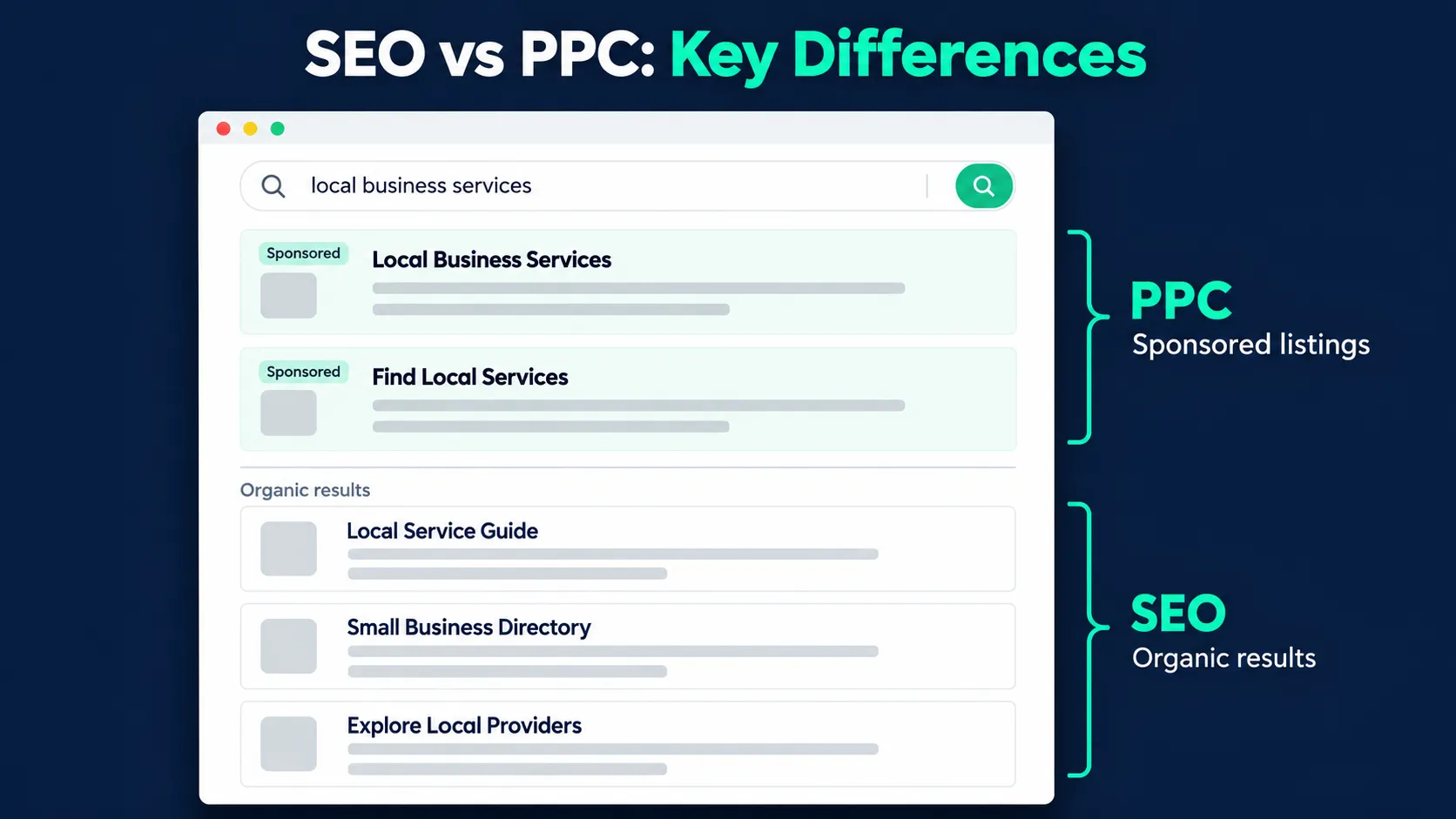
SEO vs PPC: Key Differences
The main difference between organic search and paid search is how you earn visibility and what happens when you stop investing.
| Factor | SEO | PPC |
|---|---|---|
| Cost | Website work, content, and maintenance | Clicks, management, tracking, and landing pages |
| Speed | Visibility usually develops gradually | Traffic can begin after approval and launch |
| Ongoing effort | Improve pages and technical health | Review searches, bids, ads, and conversions |
| Targeting | Content relevance and search intent | Keywords, locations, schedules, and other settings |
| After spending stops | Visibility may continue but decline | Paused ads stop generating new paid clicks |
PPC gives you faster feedback, but finding profitable campaigns takes testing. SEO can produce lasting visibility, but competitors and changing search results require continued attention.
What Does Each Strategy Really Cost?
SEO Costs: Website Improvements, Content, and Ongoing Maintenance
SEO spending typically covers keyword research, technical fixes, service-page optimization, content, and ongoing performance reviews. If you plan to outsource SEO, compare agencies based on their proposed work, implementation support, and how they measure progress.
A small service business targeting one city may need less work than a company competing across several markets. Our local SEO pricing guide explains which expenses to consider before committing to a monthly service.
PPC Costs: Ad Spend, Campaign Management, and Landing Pages
PPC expenses include advertising spend, campaign management, and landing page improvements.
Cost per click (CPC) depends on factors including competition and keyword intent. Expensive clicks aren't necessarily bad if they produce valuable customers. Review what Google Ads costs per click, lead, and month before setting your budget.
How Your Profit Margins Affect What You Can Afford to Spend
Hypothetical example: Imagine a contractor earns $400 in gross profit from an average completed job. If acquiring a customer costs $120, the remaining $280 must cover overhead and contribute to profit.
Now imagine a retailer earns only $30 per order. Paying $120 to acquire that customer would be difficult to justify without substantial repeat purchases.
The figures below are illustrative assumptions, not typical results. Costs include allocated owner time; figures exclude taxes and fixed overhead.
| Six-month measure | SEO plan | PPC plan |
|---|---|---|
| Website improvements | $1,200 | $800 |
| Content or campaign management | $2,400 | $1,200 |
| Tracking and tools | $300 | $300 |
| Advertising spend | $0 | $3,600 |
| Total marketing costs | $3,900 | $5,900 |
| New customers attributed | 20 | 30 |
| Revenue | $12,000 | $18,000 |
| Contribution after marketing | $2,100 | $3,100 |
| Marketing cost per customer | $195 | About $197 |
Illustrative six-month budget only. Revenue and contribution figures are hypothetical and should not be treated as industry averages. Confirm gross-margin assumptions when modeling actual profit.
Your acceptable customer acquisition cost (CAC) depends on gross profit, repeat business, and operating expenses. Compare those numbers before deciding whether SEO or PPC offers better value.
Which Channel Fits Your Business Right Now?
| Business type | Suitable approach | Reason |
|---|---|---|
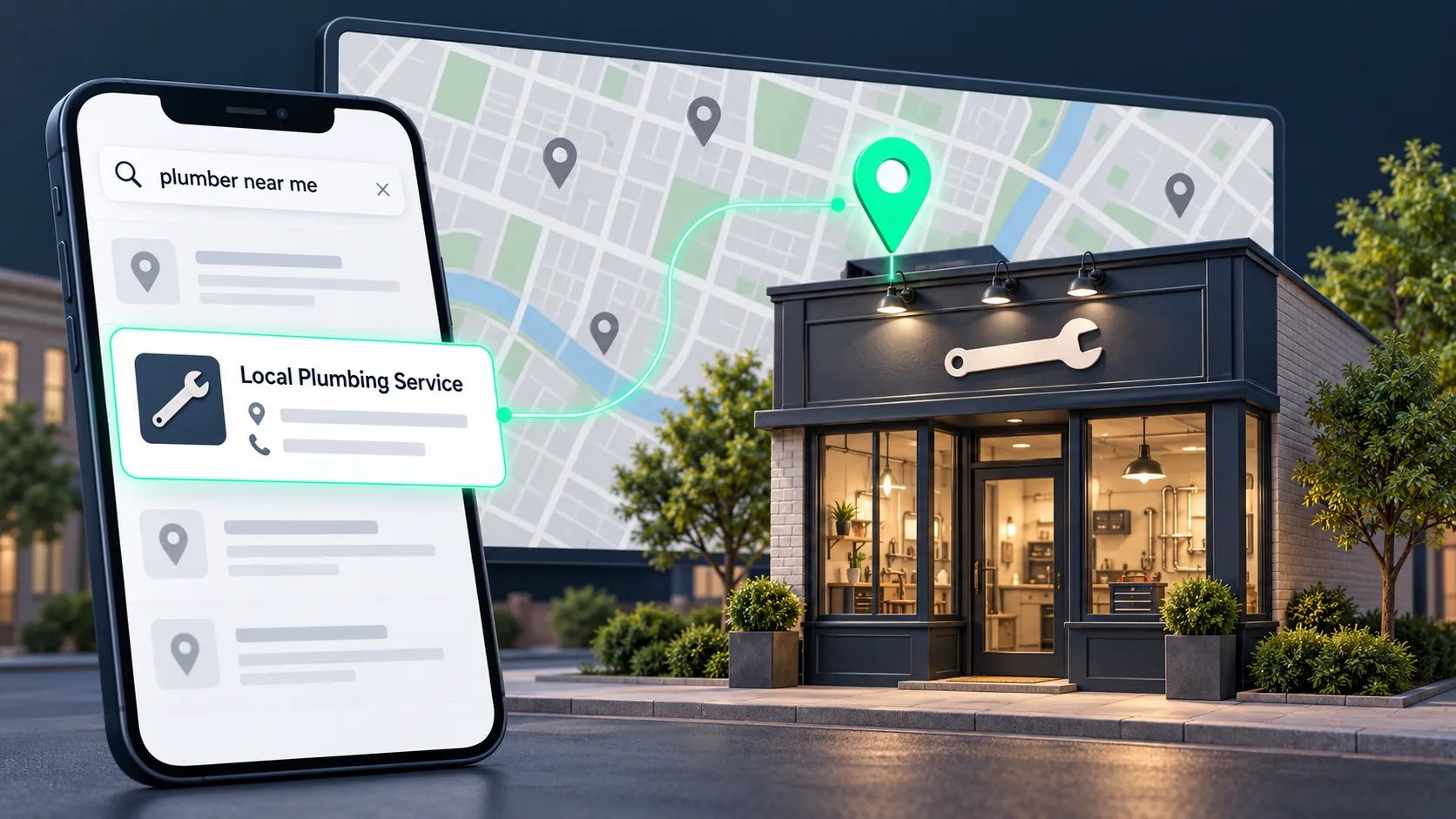
| Local service business | Local SEO with selective PPC | Builds local visibility and captures urgent demand |
| Established online store | SEO and targeted PPC | Supports product discovery and profitable sales |
| Seasonal service business | PPC supported by seasonal SEO | Reaches buyers during short demand periods |
| Growing business | PPC testing followed by SEO expansion | Validates demand before larger investments |
For nearby customers, use local keyword research to check how people describe the services you provide.
What to Fix Before Investing in Either Channel
- Make your offer and landing pages clear: Explain your services, locations, pricing considerations, and next steps. Apply conversion rate optimization principles to reduce unnecessary friction.
- Set up tracking for calls, forms, and sales: Use Google Analytics 4 (GA4), Google Search Console, and properly configured Google Ads conversion tracking.
- Check whether you can respond to more leads: Review missed calls, response times, appointment availability, and follow-up processes.
If visitors already arrive but rarely inquire, investigate conversion rate optimization before increasing traffic.
How to Tell Which Channel Brings Better Customers
Traffic, impressions, and rankings are useful diagnostic numbers. They don't tell you whether customers are buying.
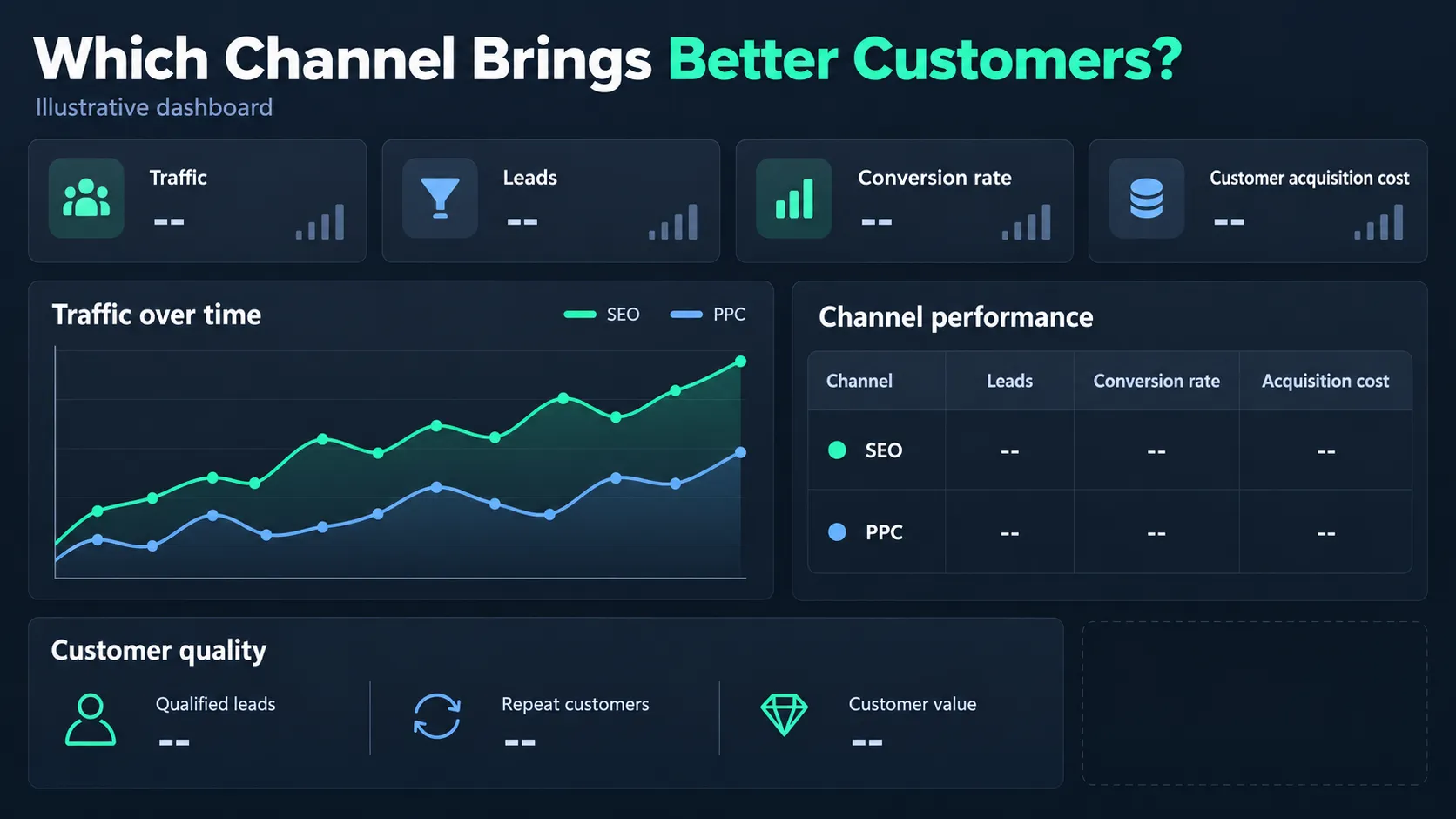
Compare Lead Quality, Acquisition Costs, and Customer Value
Track cost per lead (CPL), customer acquisition cost, conversion rates, gross profit, and return on investment (ROI).
Suppose PPC produces 30 leads but only three become customers. SEO produces 15 leads and five become customers. The smaller SEO lead volume may be more valuable, depending on acquisition costs and sales. Our local SEO ROI guide explains how to connect leads with customer value and profit.
Separate Branded Searches From New Customer Discovery
Someone searching your company name may already intend to contact you. Someone searching "roof repair near me" might be discovering your company for the first time. Separate branded and non-branded search performance where your data allows.
How to Combine SEO and PPC With a Limited Budget
A limited budget doesn't require an equal split between both channels. Start with the stronger opportunity and use what you learn to improve the other.
- Use paid search tests to inform organic content priorities: Review high-intent search terms through Google Ads and Google Keyword Planner.
- Build organic visibility around valuable customer questions: Create relevant service pages and helpful content. Prioritize topics with clear search intent.
- Keep paid campaigns where they add measurable value: Continue profitable campaigns and review weak performers. Use negative keywords to reduce irrelevant advertising clicks.
SEO and PPC work best together when each has a defined purpose, not when both simply compete for the same budget.
Your First 90 Days: A Practical Starting Plan
Days 1 to 30: Check Demand, Website Readiness, and Tracking
Deliverable: A priority keyword list, baseline results, one clear landing page, and tested tracking.
You can assess demand signals and website readiness. You cannot reliably predict future profitability yet.
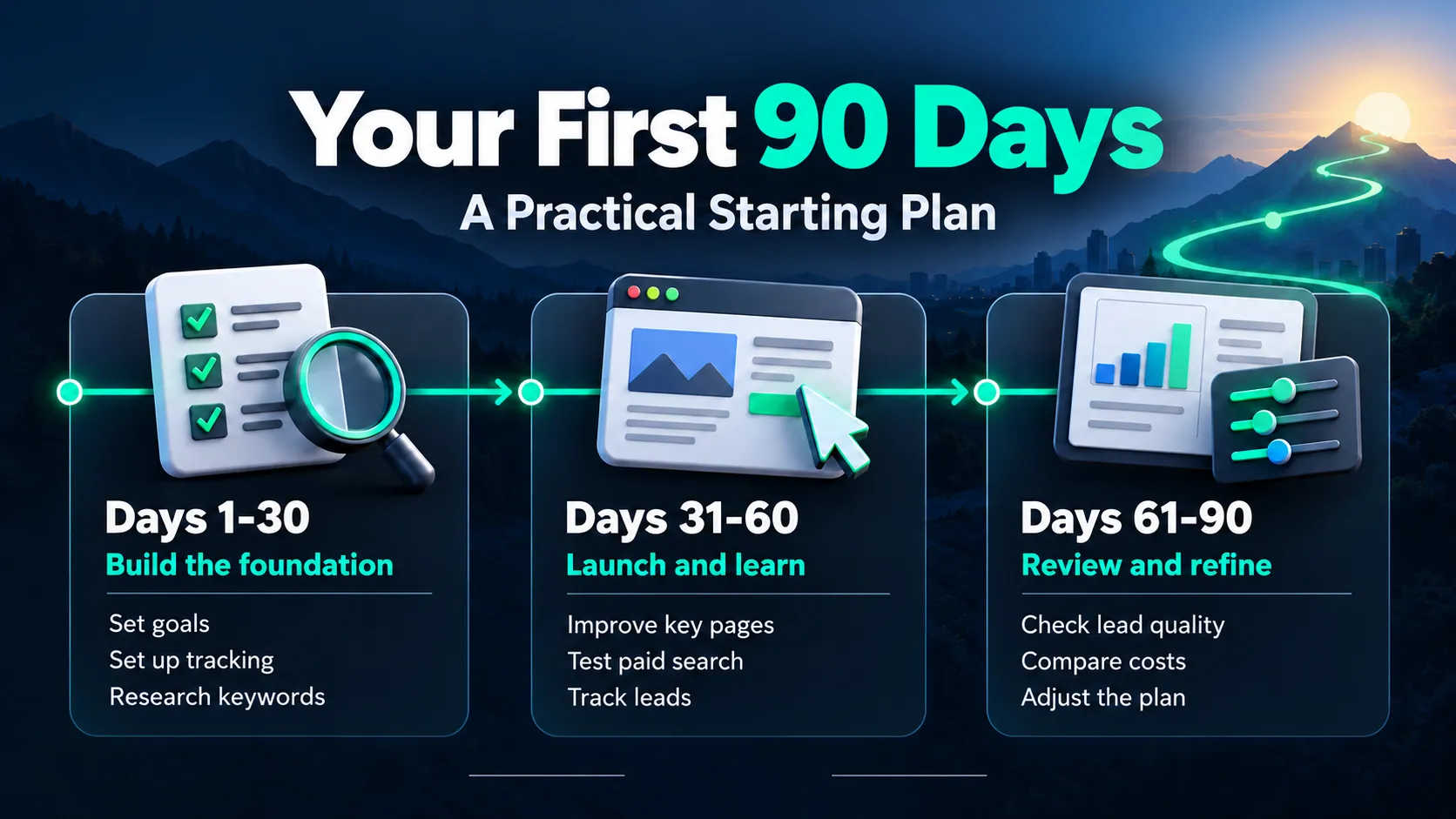
Days 31 to 60: Launch Your Priority Channel
Deliverable: Improved priority pages for SEO or a focused PPC campaign with documented settings.
Check indexing and search impressions through Google Search Console. For PPC, review relevant searches and early inquiries.
Days 61 to 90: Review Lead Quality and Adjust Spending
Deliverable: A report connecting spending, qualified leads, customers, and margins.
Identify obvious waste and promising opportunities. Low volumes or long sales cycles may require more observation.
How Can Web Solutions Help?
At Web Solutions CA, we help small businesses improve search visibility, manage paid advertising, and turn website visits into qualified inquiries. We can help you identify those priorities and develop an approach aligned with your market, budget, and customer acquisition goals.
Explore our Orange County SEO services, learn how to choose an SEO agency, or contact Web Solutions CA to discuss your website and advertising needs. If paid search is your priority, explore our Google Ads management services.
Frequently Asked Questions
Does Running Google Ads Improve Organic Rankings?
No. Google Ads spending does not directly improve organic rankings. However, PPC search-term and conversion data can help identify opportunities for SEO content.
Can You Manage SEO Yourself and Outsource PPC?
Yes. You can handle basic SEO tasks such as updating content and business information while hiring a specialist to manage Google Ads.
Is SEO Dead Now With AI?
No. AI-powered search is changing how users discover information, but useful content, technical accessibility, and relevant business information still matter.
Should You Bid on Your Business Name if You Already Rank First?
Possibly. Branded ads can promote offers or add visibility, but some clicks might have come from organic results anyway. Test incremental conversions before maintaining the expense.
Is PPC Better Than SEO?
PPC is often better for immediate testing and short-term visibility. SEO is better for long-term organic discovery. Profitability depends on your market, conversion rates, costs, and customer value.
Make Your Decision: Choose a Starting Channel and a Review Date
Start with the problem you need to solve. If inquiries are urgently needed and the margins support advertising, test PPC. If you want lasting search visibility and can invest consistently, prioritize SEO.
Set a budget, define what counts as a qualified customer, and agree on a review date before you begin. The goal is to find a customer acquisition approach your small business can afford, measure, and improve.