If you own a small business in Orange County, you already know Google Maps and local search results decide whether customers find you or your competitor down the street. Picking the best local SEO tools shouldn't take a week of research or a marketing degree. You need software that tells you exactly what's holding your rankings back and what to fix first.
This list answers that need directly. We cover tools for keyword research, citation tracking, review management, and rank monitoring, the kind of software that actually moves the needle for local businesses instead of padding a report nobody reads. Each tool here earns its spot because it solves a real problem small business owners run into: showing up in the map pack, beating a competitor's Google Business Profile, or catching technical issues before they tank your visibility.
We've worked with tax preparers, window companies, and immigration consultants across Costa Mesa, Irvine, and Santa Ana, and we've tested plenty of these platforms ourselves. Below, you'll find honest comparisons of pricing, features, and best use cases, so you can pick tools that fit your budget and actually grow your calls and leads in 2026.
1. Web Solutions CA – full-service local SEO agency
Most tools on this list hand you data and leave you to figure out what to do with it. Web Solutions CA takes a different approach: we're not software you log into, we're the team that reads the reports, makes the fixes, and answers when you call. If you're a small business owner in Costa Mesa, Irvine, or Santa Ana who doesn't have hours to spend interpreting rank tracker charts, this is the option that actually saves you time.
What it does
Web Solutions CA runs your entire local SEO strategy instead of just measuring it. That means Google Business Profile optimization, on-page fixes, technical SEO cleanup, local citation building, and monthly reporting that tells you what changed and why. We combine this with website design and development in Orange County, so a slow, outdated site never sabotages the rankings we're building. Where a standalone tool might flag a duplicate listing or a missing meta tag, we go in and correct it ourselves.
The best local SEO tool is the one that fixes problems for you, not just the one that finds them.
Who it's best for
This service fits small business owners and local service providers who want results without becoming SEO experts themselves. We work with tax preparers, window and door companies, document preparation services, and immigration consultants across Orange County, including Newport Beach, Huntington Beach, Anaheim, and Mission Viejo, and you can see how we stack up against other local SEO firms in the area. If you've tried a self-serve tool, gotten confused by the dashboard, and let it collect dust, this is built for you. It also suits businesses whose website needs work alongside their SEO, since we handle both under one roof instead of forcing you to hire separate vendors.
Key features
- Google Business Profile management including posts, Q&A monitoring, and review responses
- Local citation building across directories that matter for Orange County searches
- Technical SEO fixes for site speed, mobile responsiveness, and crawl errors
- Keyword research targeting neighborhood and city-level search terms
- Monthly reporting in plain language, not raw spreadsheets
- Workflow automation for lead handling and follow-ups so new inquiries don't sit unanswered
- Paid ads management for Orange County businesses (Google, Facebook, Instagram) when you want faster visibility alongside organic rankings
Pricing
Web Solutions CA keeps pricing transparent and scaled for small business budgets. Our monthly SEO service starts at $499.99, and website design starts at $299.99 for businesses that need a site rebuild before SEO can gain traction. Custom packages combine web development, SEO, paid ads, and automation into one plan, priced around what your business actually needs rather than a rigid tier. We respond within 24 hours, and every engagement starts with the same four-step process: understanding your business, planning for conversions, building and launching, then measuring and improving results month over month.
2. Google Business Profile
Every local SEO strategy starts here, whether you hire an agency or go it alone. Google Business Profile (formerly Google My Business) is the free listing that controls what shows up when someone searches your business name or searches for a service near them. Get this wrong and no amount of website work will save your map pack ranking.
What it does
Once you've gone through creating a Google Business Profile step by step, it lets you manage your business name, address, phone number, hours, photos, and services directly inside Google Search and Maps. It's also where customer reviews live, where you post updates, and where you answer questions before a customer even calls. Google pulls ranking signals straight from this profile, so an incomplete or outdated listing actively hurts your visibility in local search results.
Your Google Business Profile isn't a directory listing, it's your storefront on Google.
Who it's best for
Every local business needs this, full stop. It's especially critical for service-area businesses like plumbers, tax preparers, and window installers who rely on the map pack instead of foot traffic. If you're just starting out and can't afford paid tools yet, optimizing this profile is the highest-value move you can make with zero budget.
Key features
- Business information management (hours, categories, service areas, attributes)
- Review collection and response tools built into the dashboard
- Google Posts for updates, offers, and events
- Photo and video uploads that influence click-through rate
- Insights dashboard showing how customers found and contacted you
- Messaging for direct customer questions
Pricing
Google Business Profile is completely free through Google's own platform. The catch is time. Optimizing categories, writing posts, and responding to reviews takes real hours every month, which is why many of our clients hand this piece to us instead of working through every profile field themselves rather than managing it in-house.
3. Google Search Console
While Google Business Profile handles your map presence, Google Search Console watches your actual website performance in search results. It's a free tool straight from Google, and if you're serious about local search rankings, you need to check it more than once a quarter. Most business owners never open it, which means they miss the exact moment a technical issue starts dragging their traffic down.
What it does
Search Console shows you which search queries bring people to your site, which pages rank, and where Google is running into crawl or indexing errors. It flags mobile usability issues, broken links, and pages that dropped out of the index without warning. You can also see click-through rates for specific keywords, which tells you whether your title tags and meta descriptions are actually earning clicks or getting skipped over.
If Google can't crawl your site properly, nothing else on this list matters.
Who it's best for
Anyone with a website that's meant to generate leads should have this connected from day one. It suits DIY-minded owners who want to catch problems early, and it's essential for agencies managing multiple client sites, since it's usually the first place a ranking drop shows up. Businesses relying on local keyword tracking for city or neighborhood terms will find the query data especially useful for spotting new opportunities.
Key features
- Performance reports showing clicks, impressions, and average position by query and page, which you can slice further with a Search Console regex filter builder
- Coverage reports flagging pages Google can't index
- Core Web Vitals data tied to page speed and user experience
- Sitemap submission to help Google discover new pages faster
- Manual action alerts if Google penalizes your site for a policy violation
Pricing
Search Console is entirely free, straight from Google's own tools. The tradeoff is that it only shows raw data. It won't tell you which fix to prioritize or write the code to fix a crawl error, which is why we pair it with a hands-on local SEO audit for clients who'd rather not decode the reports themselves.
4. BrightLocal
Once you move past free tools, BrightLocal is usually the first paid platform small business owners run into. It's built specifically for local SEO agencies and consultants, which means every feature ties back to rankings, citations, and reviews instead of general SEO fluff. If you're managing more than one location or comparing yourself against three or four local competitors, this is where a lot of that tracking happens.
What it does
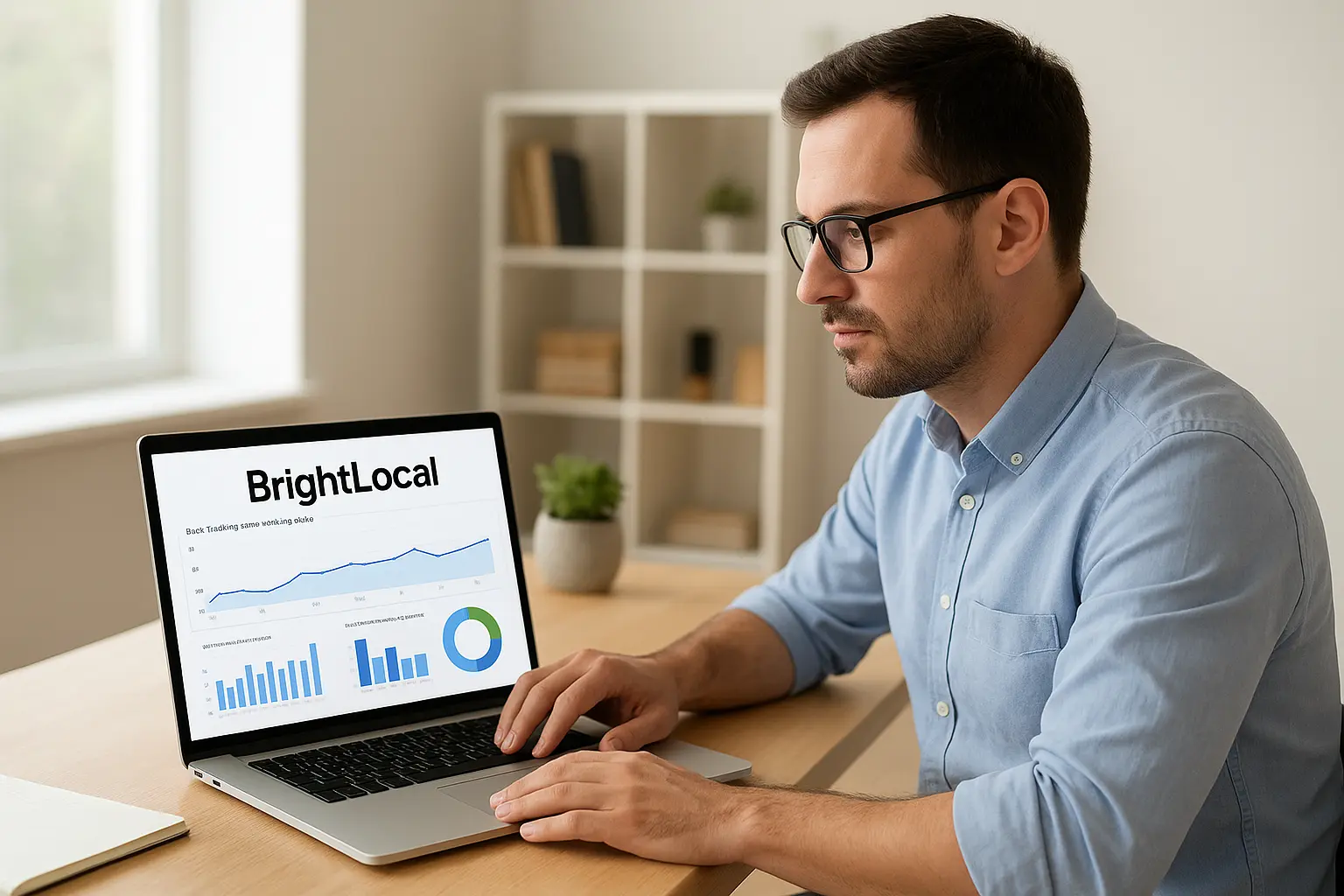
BrightLocal centers on local rank tracking software, showing exactly where you rank in the map pack and organic results for specific search terms in specific neighborhoods, not just citywide averages. It also runs citation audits, checking whether your business name, address, and phone number match across directories like Yelp, Yellow Pages, and industry-specific sites. A mismatched address on even one directory can quietly hurt your rankings, since consistent name, address, and phone details matter to Google, and BrightLocal flags those inconsistencies for you.
Ranking data only helps if you can see it down to the neighborhood, not just the city.
Who it's best for
BrightLocal fits agencies and consultants managing multiple client accounts, plus multi-location businesses that need to compare performance across cities. Solo business owners with a single location can use it too, but the reporting depth is really built for someone tracking several sites or locations at once. It's less useful if you only need a quick, one-time citation cleanup.
Key features
- Local rank tracker with grid-based reporting by exact location
- Citation building and tracking across dozens of directories
- Reputation manager for review monitoring and response across platforms
- White-label reporting for agencies presenting to clients
- Google Business Profile audit tool for spotting listing errors
Pricing
BrightLocal's plans start around $39 per month for a single-location tracker package, with agency-level plans running higher based on the number of locations and citation packages you need. Add-ons like citation building are often billed separately, so costs climb quickly once you're managing several clients or storefronts.
5. Semrush Local
Semrush built its name on broad SEO and content research, but the Semrush Local add-on narrows that firepower down to map pack rankings and listing management. If you already use Semrush for keyword research or competitor analysis, adding the local module means one login instead of juggling a separate citation tool and rank tracker.
What it does
Semrush Local bundles a listing management dashboard, review tracking, and a local rank tracker into the wider Semrush platform. It scans directories to find where your business information is missing or inconsistent, then lets you push corrections out from a single screen instead of updating each site by hand. The tool also ties into Semrush's keyword database, so you can handle keyword research for local searches like "plumber near me" or "Costa Mesa tax preparer" without leaving the dashboard.
A rank tracker only earns its keep when it's connected to real keyword data, not just a list of positions.
Who it's best for
Businesses already paying for a Semrush subscription get the most value here, since the local module rides on top of tools they're likely using anyway. Marketing teams comparing local keyword rankings against broader organic performance also benefit, since everything lives in one report. Solo owners with no existing Semrush account probably won't find enough here to justify the cost on its own.
Key features
- Listing management across major directories with automated distribution
- Local rank tracking by city and zip code
- Review monitoring across Google and other platforms
- Position tracking integrated with Semrush's core keyword tools
- On-page SEO checker with local-specific recommendations
Pricing
Semrush Local runs about $20 per month per location, added on top of a core Semrush plan, which starts around $139.95 per month. That combined cost puts it out of reach for a business that only needs local citation cleanup, but it's reasonable for a company already relying on Semrush for full SEO reporting.
6. Moz Local
Moz built its reputation on domain authority scores and keyword tools, and Moz Local applies that same data-driven approach to citation management. It's a straightforward option if you want your business listings accurate across the web without paying for a full agency retainer, and it plays nicely with Moz's broader SEO suite if you're already tracking backlinks or keyword rankings there.
What it does
Moz Local handles the work of building citations on directories by pushing your business name, address, and phone number out to major data aggregators, then monitors those listings for changes or duplicates that could confuse Google. It also surfaces a Local Search Score, a single number that estimates how visible your business is compared to competitors in the same area. Review monitoring across Google and Facebook is built in, so you're not checking three separate dashboards for new feedback.
A single accurate listing beats twenty inconsistent ones every time.
Who it's best for
Small business owners who want automated citation management without learning a complicated interface will find this the easiest tool on the list to pick up. It also suits businesses that already use other Moz products, since the local score integrates with their existing SEO reports. Companies needing deep competitor rank tracking should look elsewhere, since that's not where Moz Local focuses its energy.
Key features
- Automated listing distribution to major aggregators and directories
- Duplicate listing detection and suppression requests
- Review monitoring across Google and Facebook
- Local Search Score benchmarking against competitors
- Google Business Profile syncing for consistent hours and categories
Pricing
Moz Local starts at $14 per month for a single location on an annual plan, or around $16 month-to-month, making it one of the more affordable options for straightforward citation upkeep. Multi-location businesses pay per listing, and pricing scales down slightly at higher volumes, which makes it worth comparing against BrightLocal if citations are your main concern rather than full rank tracking.
7. Whitespark
Whitespark carved out a niche as the citation-building specialist long before local SEO became a crowded software category. Small business owners who tried DIY citation building and gave up after the fifth directory rejected their submission tend to land here next, since Whitespark's whole model is built around getting listings live, not just flagging that they're missing.
What it does
Whitespark runs a citation building service where actual humans submit your business information to relevant directories instead of relying purely on automated feeds. It also includes a local rank tracker that shows map pack and organic positions by specific search location, plus a review management tool for requesting and monitoring feedback across platforms. The combination matters because citations and reviews both feed into how Google ranks you, and Whitespark treats them as connected problems rather than separate reports.
Citations built by hand tend to stick where automated submissions get rejected.
Who it's best for
Business owners who tried a self-serve citation tool and hit rejected submissions or duplicate listings will appreciate the hands-on approach here. It also suits agencies that want white-label rank tracking reports without building the infrastructure themselves. If your priority is a single dashboard covering technical SEO, ads, and citations together, Whitespark's narrower focus won't cover everything you need.
Key features
- Manual citation building with human review of each submission
- Local rank tracker showing grid-based results by neighborhood
- Reputation Builder for automated review requests
- Local SEO audit tool flagging listing inconsistencies
- White-label reporting for agencies managing client accounts
Pricing
Whitespark's rank tracker starts around $17 per month for a small number of tracked keywords, while citation building packages are priced separately, often starting near $3 to $5 per citation depending on volume and speed. That separated pricing model means costs add up fast if you need both rank tracking and a large citation cleanup at once.
8. Local Falcon
Rank tracking gets tricky the moment your business serves more than a couple of neighborhoods, and that's exactly the gap Local Falcon fills. It plots your Google Business Profile ranking across a visual grid of map points instead of a single average position, so you can see precisely where your Google Maps SEO efforts land you in the map pack and where you disappear a few blocks away.

What it does
Local Falcon generates a geo-grid ranking report by simulating searches from dozens or hundreds of points around a chosen location, then color-codes each point based on where your listing lands. This matters because a business can rank first near its storefront and drop off the map entirely just two miles out, a blind spot that a normal rank tracker never catches. The tool also compares your visibility against named competitors at each grid point, which makes it easy to spot exactly which neighborhoods you're losing.
A single rank number tells you almost nothing if your customers are searching from three different zip codes.
Who it's best for
Businesses that serve customers across a wide area, like the window installers and immigration consultants we work with across Orange County, get the most value here. Multi-location businesses trying to understand why one storefront outperforms another also lean on Local Falcon's grid data heavily. Solo owners with a tightly local customer base close to their storefront may find the granularity more detail than they actually need.
Key features
- Geo-grid rank tracking with visual heat maps by search point
- Competitor comparison at each grid location
- Automated scans on scheduled intervals
- Falcon Guard alerts for suspicious ranking changes or profile edits
- Keyword ranking reports exportable for client presentations
Pricing
Local Falcon offers pay-as-you-go scans starting under $10, along with subscription plans beginning around $22 per month for regular tracking. Costs rise with grid size and scan frequency, so agencies running large geo-grids across several clients should budget for the higher tiers rather than the entry plan.
9. Yext
Yext takes a different angle from most tools on this list by treating your business listing as data that needs to live everywhere at once, not just on Google. It built its reputation on speed, pushing updates to dozens of directories, apps, and voice assistants in minutes instead of the weeks it can take for changes to propagate naturally across the web.
What it does
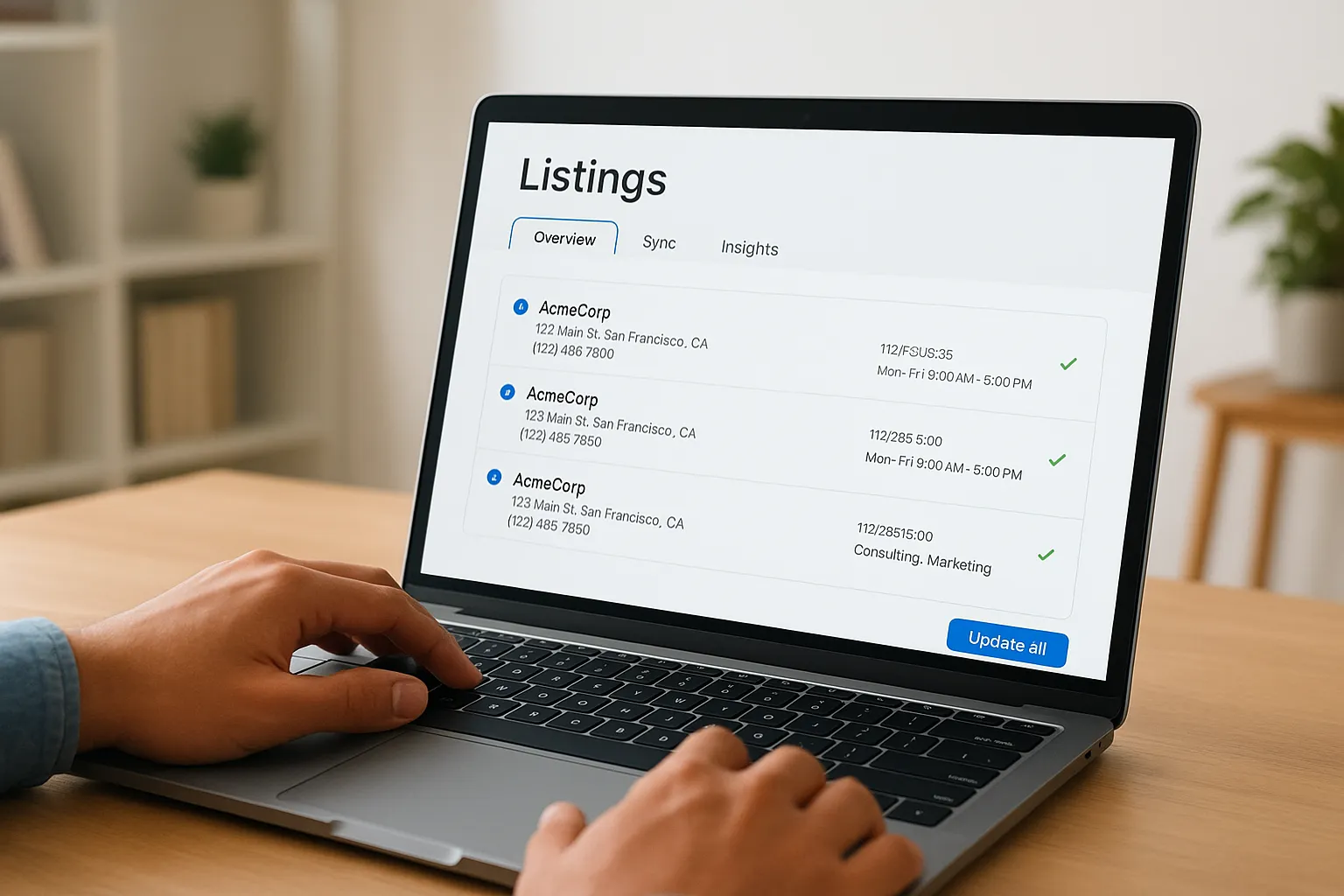
Yext works as a listings management platform that syncs your business name, address, phone number, hours, and services across a huge network of directories, map apps, and even voice search platforms like Alexa. Update your holiday hours once inside Yext, and it pushes that change everywhere your business appears instead of forcing you to log into fifteen separate directory dashboards. It also includes review monitoring and a basic page builder for businesses with multiple locations that need individual city landing pages.
One update pushed everywhere beats fifteen logins to fix the same address.
Who it's best for
Yext fits multi-location brands and franchises that need consistent local listings across dozens or hundreds of storefronts. It also suits businesses that care about showing up correctly in voice search results, since Yext's network extends beyond typical directories into that space. A single-location small business will likely find the platform's scale, and its price tag, more than what a simple citation cleanup actually requires.
Key features
- Knowledge Graph syncing across directories, apps, and voice assistants
- Review monitoring and response across major platforms
- Local landing pages for multi-location businesses
- Listings analytics showing views and actions per location
- API access for enterprise-level integrations
Pricing
Yext pricing starts around $199 per year per location for its base listings package, with enterprise plans running significantly higher once you add review management, analytics, and multiple locations. That pricing structure makes it a tool built for scale rather than a fit for a single Costa Mesa storefront watching every dollar.
10. Localo
Localo built its whole platform around one idea: tell business owners exactly what to do next instead of just showing them a dashboard full of numbers. It's a newer entrant compared to BrightLocal or Moz Local, but it's carved out a following among owners who want a guided list of local SEO steps rather than raw data they have to interpret themselves.
What it does
Localo tracks your Google Business Profile ranking across a radius map, similar to Local Falcon, but pairs that data with an AI-generated task list that tells you which specific action to take next, whether that's adding photos, requesting reviews, or fixing a category mismatch. It also monitors your local search rankings against named competitors and flags profile changes that could hurt visibility. The task-based structure means you're not just watching a graph move, you're checking off concrete steps.
A ranking chart means little without a next step attached to it.
Who it's best for
Owners who feel overwhelmed by other tools' reporting screens tend to prefer Localo's simplified approach. It suits solo operators and small teams managing one or two locations who want a local SEO tool that behaves more like a coach than a spreadsheet. Agencies managing dozens of client accounts may find the platform's client-facing simplicity limits the depth of white-label reporting compared to BrightLocal or Whitespark.
Key features
- AI task recommendations prioritized by ranking impact
- Radius rank tracking with visual grid maps
- Competitor benchmarking against nearby businesses
- Google Business Profile health score updated regularly
- Review request automation built into the task flow
Pricing
Localo starts around $32 per month for a single location, with tiered plans scaling up based on the number of locations and keywords tracked. That price sits between Moz Local's entry tier and BrightLocal's full package, positioning it as a mid-range option for owners who want more guidance than a basic citation tool but don't need full agency-level reporting.
11. GMB Everywhere
GMB Everywhere strips away the dashboard entirely and puts local SEO data right where you're already looking: inside your Google search results. It's a browser extension, not a standalone platform, which makes it the fastest tool on this list to start using and one of the cheapest to test before committing.
What it does
GMB Everywhere overlays Google Business Profile data directly onto search results and Google Maps as you browse. Search your own business name or a competitor's, and the extension shows category information, review counts, posting frequency, and even estimated signals behind local pack placement without leaving the search page. It also flags keyword-stuffed business names and category mismatches, two tricks competitors sometimes use to game the map pack that Google's own interface won't call out.
Seeing your competitor's profile data inside your own search results beats guessing why they outrank you.
Who it's best for
Owners who want a quick, informal look at what local competitors are doing without paying for a full subscription tool will get the most out of this. It suits solo business owners doing their own SEO homework on evenings and weekends, and it's a smart add-on for anyone already using Search Console or Google Business Profile who wants extra context on the fly. Agencies managing dozens of accounts will likely need a more structured platform like BrightLocal or Whitespark alongside it, since GMB Everywhere doesn't build reports for clients.
Key features
- In-search overlay showing Google Business Profile details on any search result
- Category and keyword audit flagging spammy or mismatched business names
- Review and posting activity visible for any competitor's profile
- Grid rank checking for map pack position by area
- Chrome extension format requiring no separate login or dashboard
Pricing
GMB Everywhere offers a free version with basic overlay features, while the paid tier runs about $19.99 per month for full access to grid tracking and audit tools. That low entry cost makes it an easy first tool for owners testing whether they even need deeper local SEO software.
12. How to choose the right local SEO tool for your business
Budget should drive your first decision, not feature lists, and there are low-cost local SEO options worth weighing before you spend more. A single-location tax preparer doesn't need Yext's enterprise pricing, and a five-location franchise shouldn't rely on a free Chrome extension. Match the tool's pricing tier to how many locations you actually manage, then work outward from there.

Consider what problem you're actually trying to solve before you compare local SEO software. If citations are inconsistent across the web, Whitespark or Moz Local solves that directly. If you can't tell why you rank well downtown but disappear three miles out, Local Falcon or Localo's grid tracking answers that question better than a single-position rank tracker ever will.
Buy the tool that fixes your specific problem, not the one with the most features on its pricing page.
Think about time, too. Every tool on this list assumes you'll log in, read the report, and take action yourself. If you're already stretched managing a business, that assumption falls apart fast, which is exactly why done-for-you local SEO providers appeal to owners who want results without adding another dashboard to check weekly.
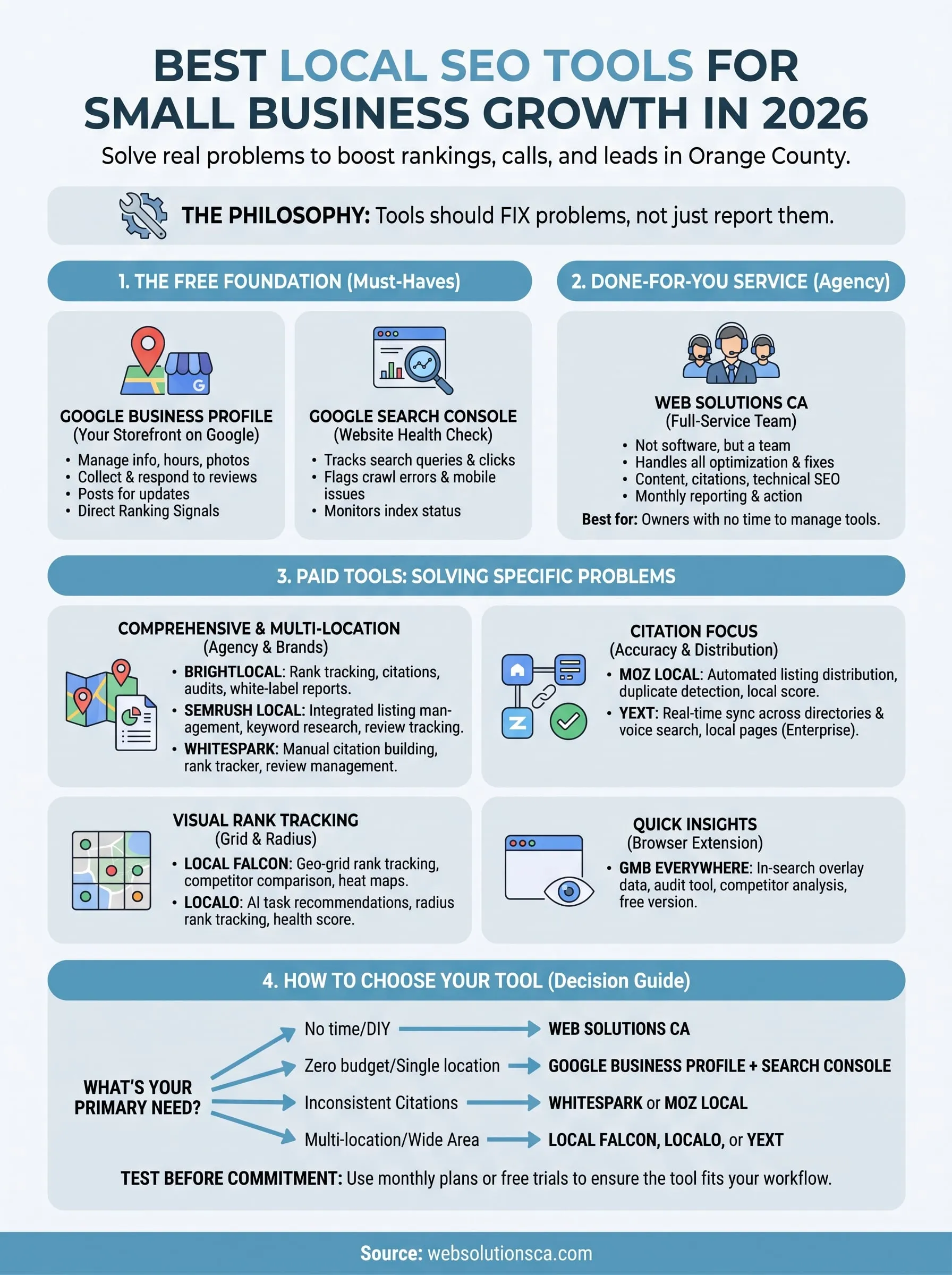
Here's a quick way to match your situation to a starting point:
| Your situation | Start here |
|---|---|
| No time to manage tools yourself | Web Solutions CA |
| Zero budget, single location | Google Business Profile + Search Console |
| Inconsistent citations across directories | Whitespark or Moz Local |
| Multiple neighborhoods or service areas | Local Falcon or Localo |
| Multi-location brand or franchise | Yext |
| Already using Semrush for broader SEO | Semrush Local |
Finally, test before you commit to annual billing. Most local SEO tools offer monthly plans or free trials specifically so you can confirm the reporting actually matches how you work before locking in a yearly contract.
Making local SEO tools work for your business
Every tool on this list solves a piece of the puzzle, but none of them fix your rankings by themselves. Google Business Profile and Search Console give you the free foundation, while paid platforms like BrightLocal, Local Falcon, and Whitespark fill in citation tracking, grid rankings, and review management once you're ready to spend. Picking the best local SEO tools for your situation still leaves you with the work of logging in, reading reports, and actually making the fixes every month.
That's the part small business owners in Costa Mesa, Irvine, and Santa Ana usually don't have time for. If you'd rather have someone else read the dashboards and handle the corrections, our local SEO services for Orange County businesses run your entire strategy so you can spend your hours running the business instead of decoding rank tracker charts.